
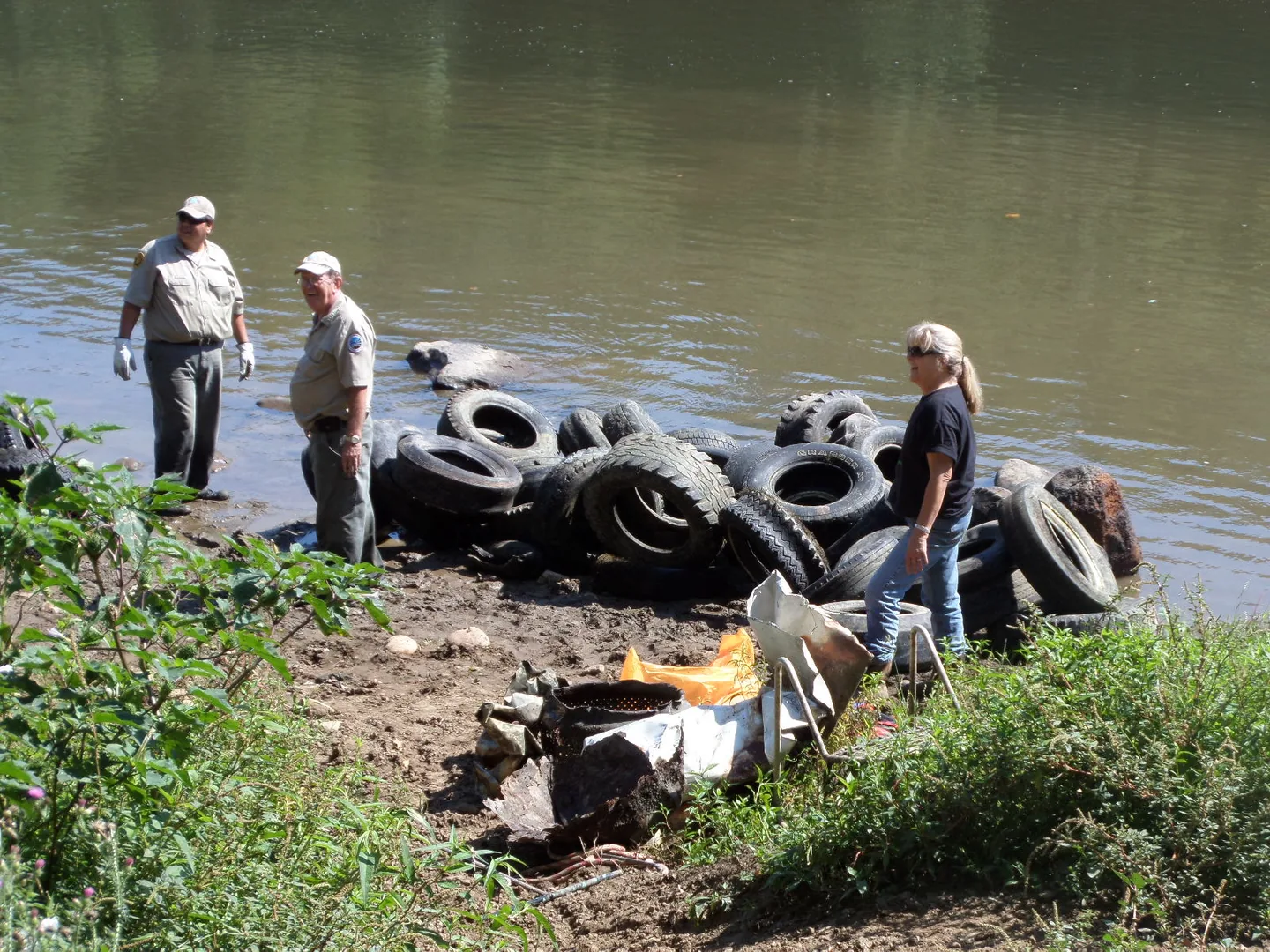
Community cleanups along river corridors, vacant lots, and public greenways depend as much on pre-planned haul-away logistics as on volunteer turnout. Without clear staging and stream separation, collected debris quickly creates a disposal bottleneck at the end of the day.
1. Separate Specialty Items From General Litter
Illegally dumped piles almost always include automotive tires, rusted metal fencing, broken appliances, and household plastics. Whole tires and sealed drums are commonly restricted from standard municipal landfill dumpsters. Designating separate staging tarps for scrap metal, whole tires, and bagged litter keeps loads compliant and enables metal and tire recycling.
2. Brief Volunteers on Hazardous Finds
Equip volunteers with sturdy puncture-resistant gloves, grabbers, and closed-toe boots—and establish a strict "flag, do not open" rule for unlabeled chemical jugs, propane cylinders, or medical sharps. Experienced site leads or municipal environmental teams can coordinate proper regulated pickup for flagged items.
3. Confirm Container Placement Before Event Day
Stage roll-off dumpsters on firm gravel or paved parking pads clear of overhead tree limbs, and confirm end-of-day haul-away windows ahead of time. Book temporary containers cleanly via our Dumpster Rental service.